Return Brand List


Chinese Name
Langson
Country
United States
Manufacturer
Ronson Art Metal Works, Inc.
Year Founded
1896 year
RONSON
Brand Introduction
Ronson is the most disruptive pioneer in the history of the lighter industry and the originator of automatic lighters. Founded by industrialist Louis V. Aronson in 1896 in Newark, New Jersey, Ronson revolutionized lighters by transitioning them from "semi-automatic" to "one-touch fully automatic." Between 1920 and 1950, it established a formidable patent barrier for automatic ignition, effectively monopolizing the mechanical lighter market in North America and Europe. Known for its luxurious craftsmanship and designs spanning Art Deco to Modernism, Ronson is widely recognized as the top pillar among collectors' three essential vintage smoking accessories.
Milestones
1. The Era of Art Metal & Safety Matches (1896 – 1912)
Founder Alonson established The Art Metal Works, leveraging his exceptional metallurgy and electroplating expertise—including a patent-pending gold plating method. Initially, the company produced exquisite metal crafts such as figurines, lamp bases, and inkwells. Around 1910, he developed and sold early "non-fuel" ignition toys like the Pist-O-Liter, which used iron flints to create sparks, laying the foundation for future lighter development.
2. Entering the Fluid Lighter Market (1913 – 1925)
In 1913, the company launched its first pocket fluid lighter: the Wonderlite. This classic manual lighter required users to pull out a metal rod and strike it against the side, much like lighting a match. Despite its manual operation, the Wonderlite marked the beginning of Ronson's dominance in the smoking accessory market.
3. Launch of the Fully Automatic "Banjo" and Patent Monopoly (1926 – Late 1930s)
1926 was a milestone in lighter history. Alonson invented and released the world's first one-button automatic lighter, the Ronson Banjo. Its slogan, "A press, it's lit; release, it's out," swept the globe. Throughout the 1930s, Ronson leveraged this full-automatic patent to sue all competitors (including Evans and Marathon). Through litigation victories and licensing agreements, the company forced the entire industry to pay royalties.
4. WWII Military Production and the Battlefield-Famous Whirlwind (1940s)
During World War II, Ronson mass-produced military supplies for the U.S. Army. Simultaneously, its Whirlwind lighter, featuring a specialized windproof sleeve designed for outdoor use, accompanied American soldiers overseas. Alongside Zippo, it became one of the most iconic smoking accessories on the battlefield.
1940. Gas Technology Transition (1950s – 1960s)
Post-war demand for long-lasting, clean energy led Ronson to launch the groundbreaking Varaflame gas lighter series in 1957. This line introduced an iconic adjustable flame valve, once again setting the global trend for gas lighters.
5. Decline and Brand Splitting (1970s Onward)
Facing competition from cheap plastic disposables and rising anti-smoking movements, high-cost domestic U.S. factories became unsustainable. During the 1970-1980s, Ronson gradually closed, sold, and split its global operations (such as separating UK Ronson from US Ronson), marking the end of an era. Later, in the 21th century, the Zippo Group acquired certain brand assets.

Brand Patent
View All
View details
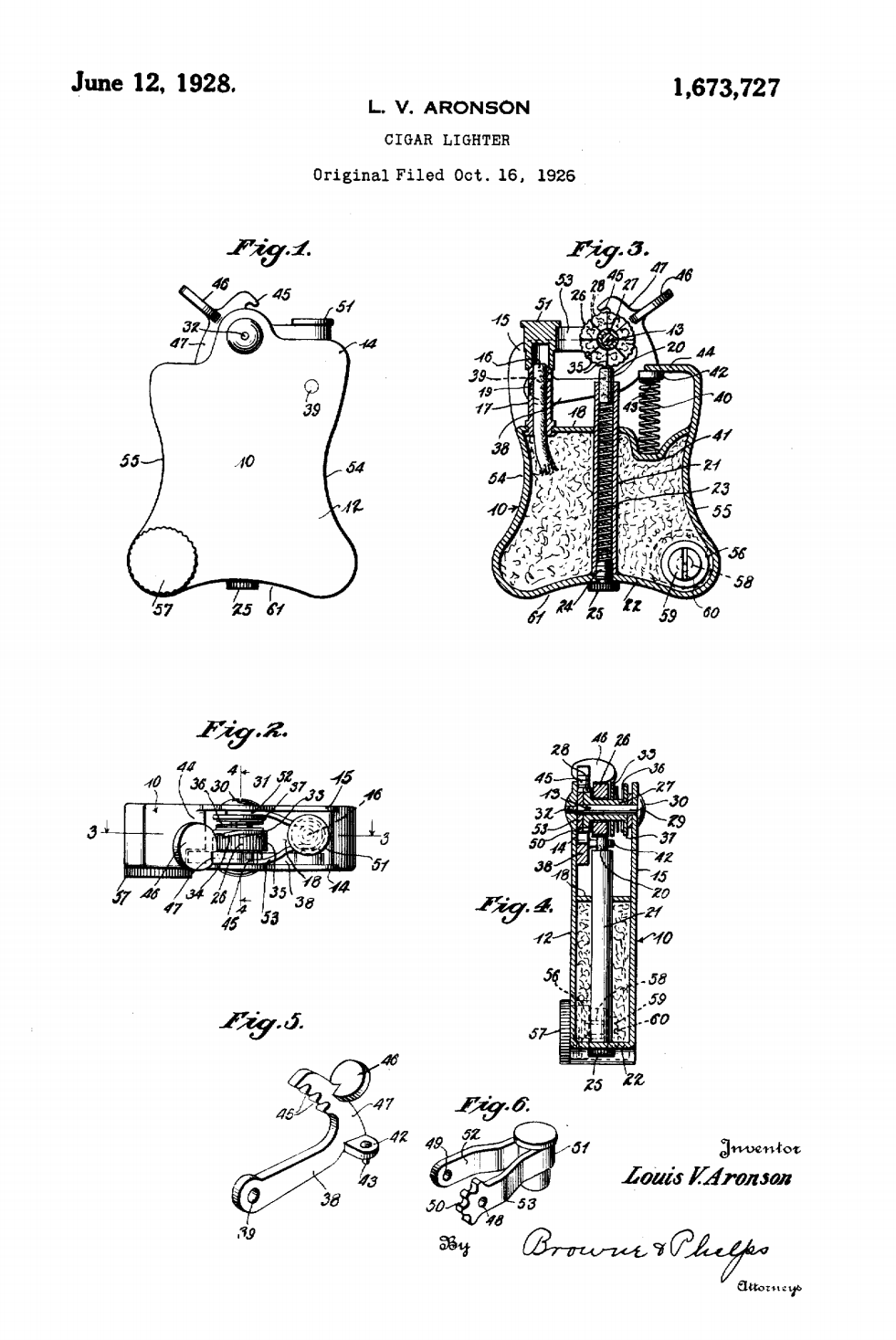
United StatesPatent1926Year
Patent No.:US 1673727 A
Application Date:1926, 10 14
Registration Date:1928, 06 12

View details
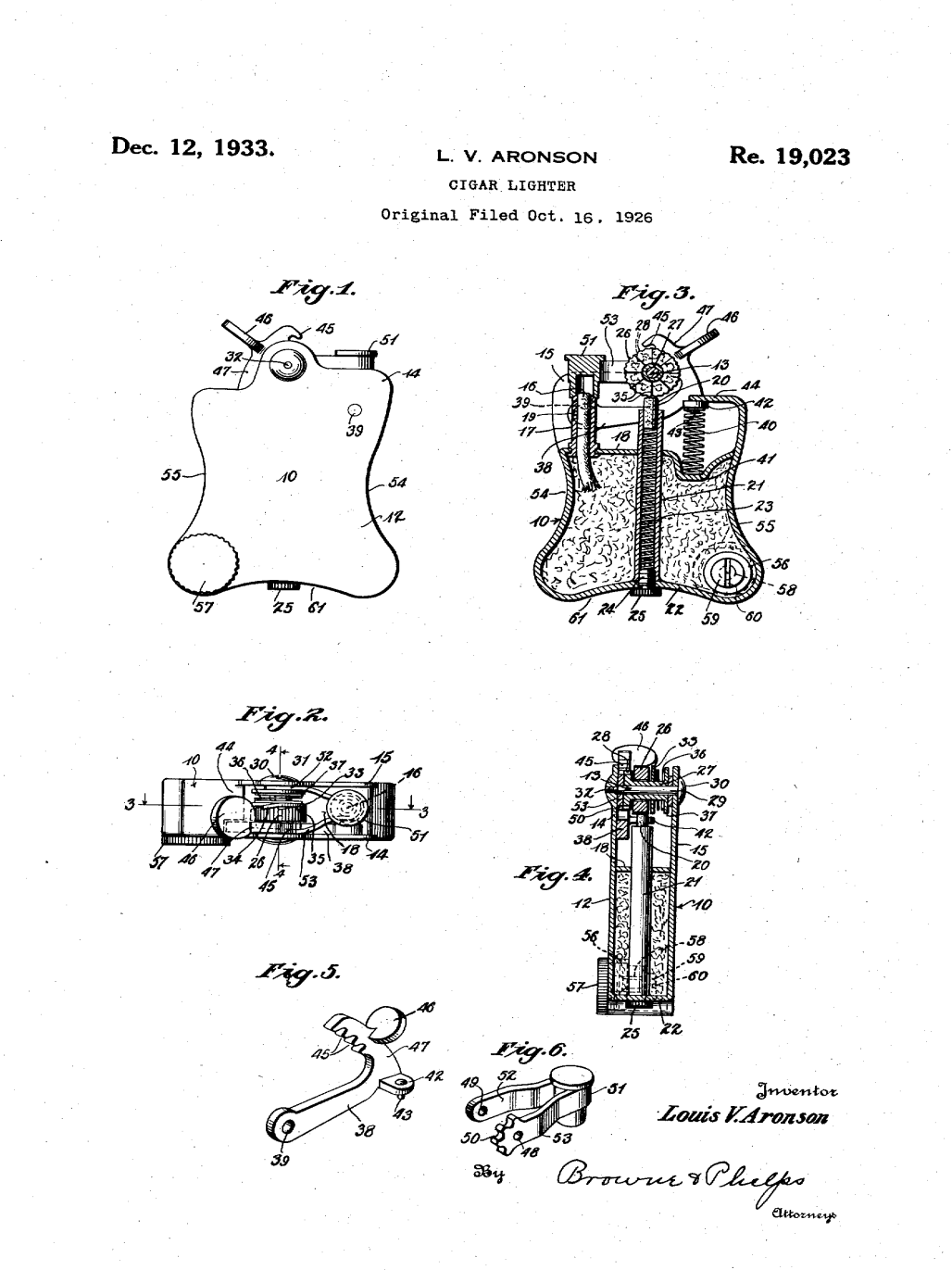
United StatesPatent1926Year
Patent No.:US RE9023 E
Application Date:1926, 10 16
Registration Date:1933, 12 12

View details
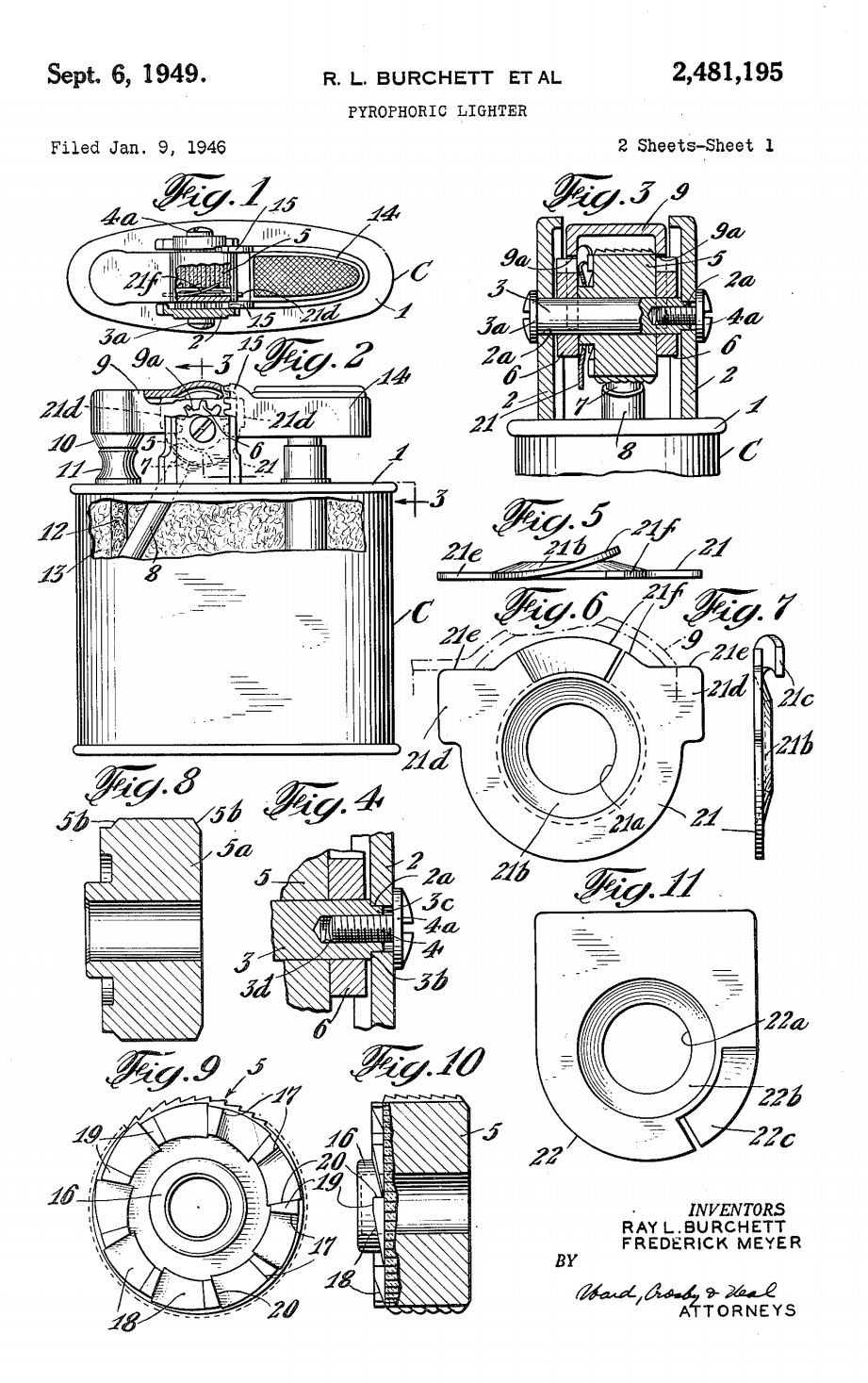
United StatesPatent1946Year
Patent No.:US 2481195
Application Date:1946, 01 09
Registration Date:1949, 09 06

View details
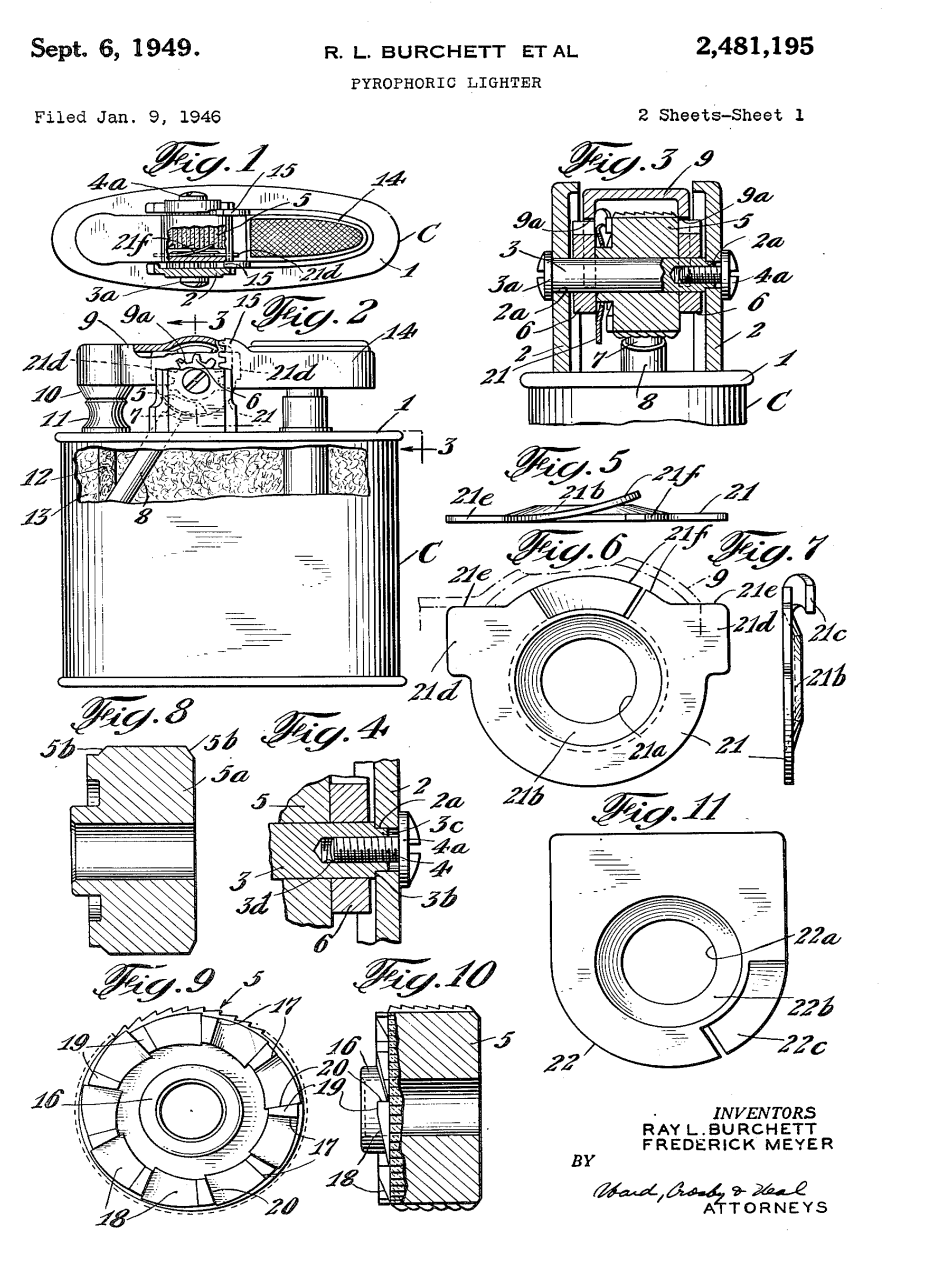
United StatesPatent1946Year
Patent No.:US 2481195 A
Application Date:1946, 01 09
Registration Date:1949, 09 06
Ads & Articles
View AllNo ads or articles available for this brand.
Product Line
1926
BANJO
1926No description


GEM
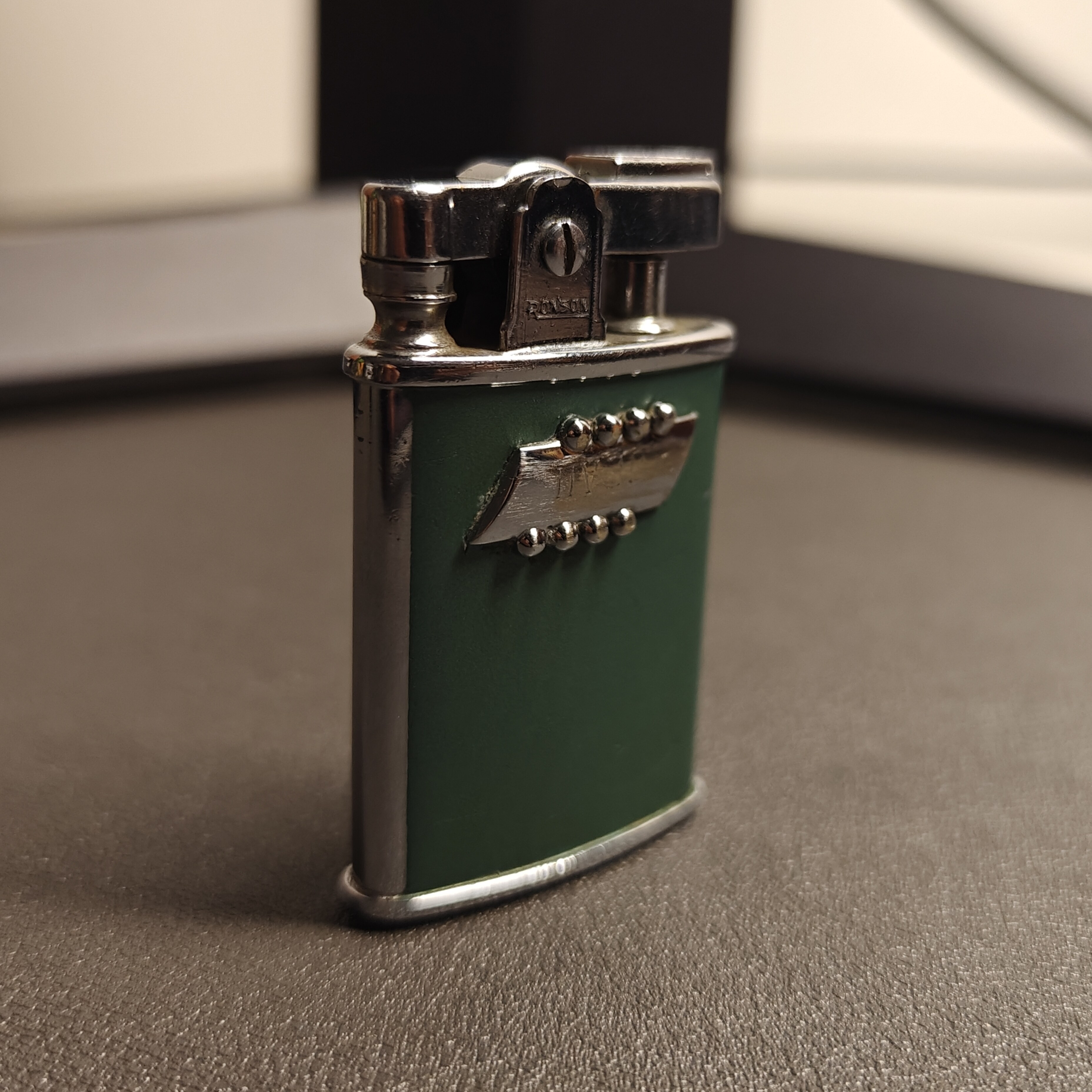
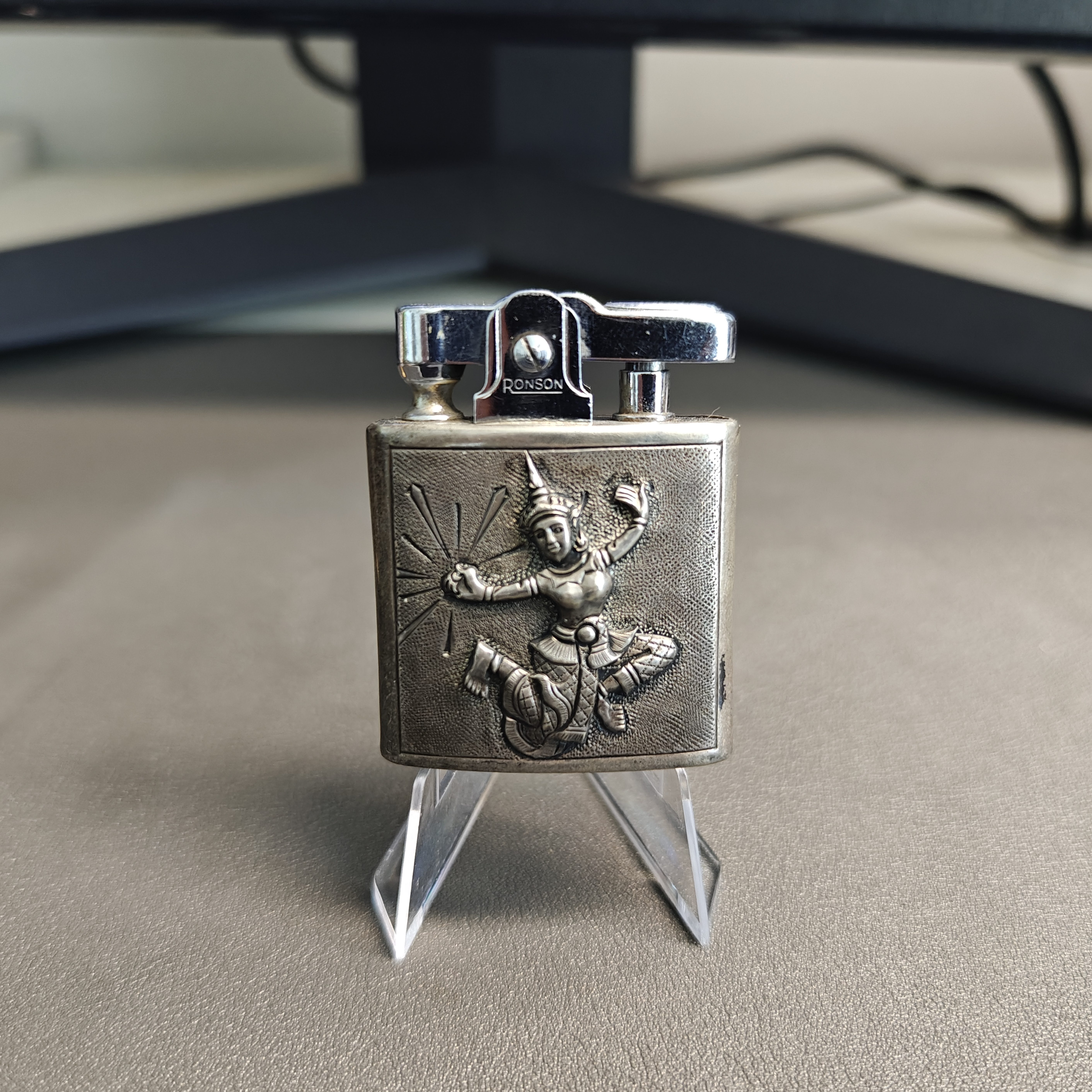
1936-1941In the 20s, as smoking became popular among women and in high-society circles, the traditional Ronson Standard or Whirlwind appeared too bulky. Responding to the trend toward smaller, more refined designs, Ronson launched the Gem line. Its purpose was to create a lightweight, premium social lighter that felt like a "gem" in the palm—small enough to fit in an evening gown pocket or a lady's clutch. It targeted fashion-conscious women, business professionals, and the gift market for the upper class.
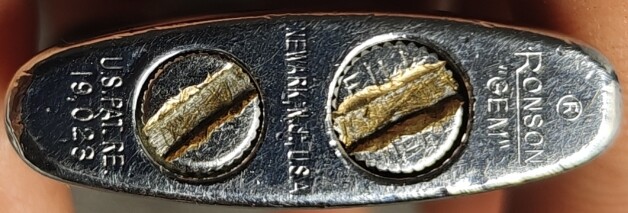
The bottom is engraved with U.S.PAT.RE. 19,023. This is the reissue patent number for Ronson's core "drop-to-extinguish" fully automatic linkage mechanism, officially granted in 1933 12. The single-arm linkage ignition system works by pressing the right-side cap: the flint wheel rotates to spark and ignite the wick while lifting the wind guard; releasing the cap allows the spring to snap back, dropping the guard to extinguish the flame. Compared to the Standard series, this body is noticeably slimmer, with more sharply curved sides and elegant lines.
This series was primarily produced from the mid-1930s to the late-1940s (gradually replaced after WWII by the thinner Adonis series).


WHIRLWIND
1943-19601930 年代主流便携打火机防风性能差,户外、车内、大风环境极易熄灭;Ronson 研发 Whirlwind 封闭式螺旋风道防风仓,按压自动抬臂点火,双层金属腔体隔绝气流,兼顾口袋便携与强防风能力;同时标准化外壳模具,可批量生产珐琅、雕刻、贵金属装饰版本,平衡日用实用性与装饰收藏属性。


Standard(二代)
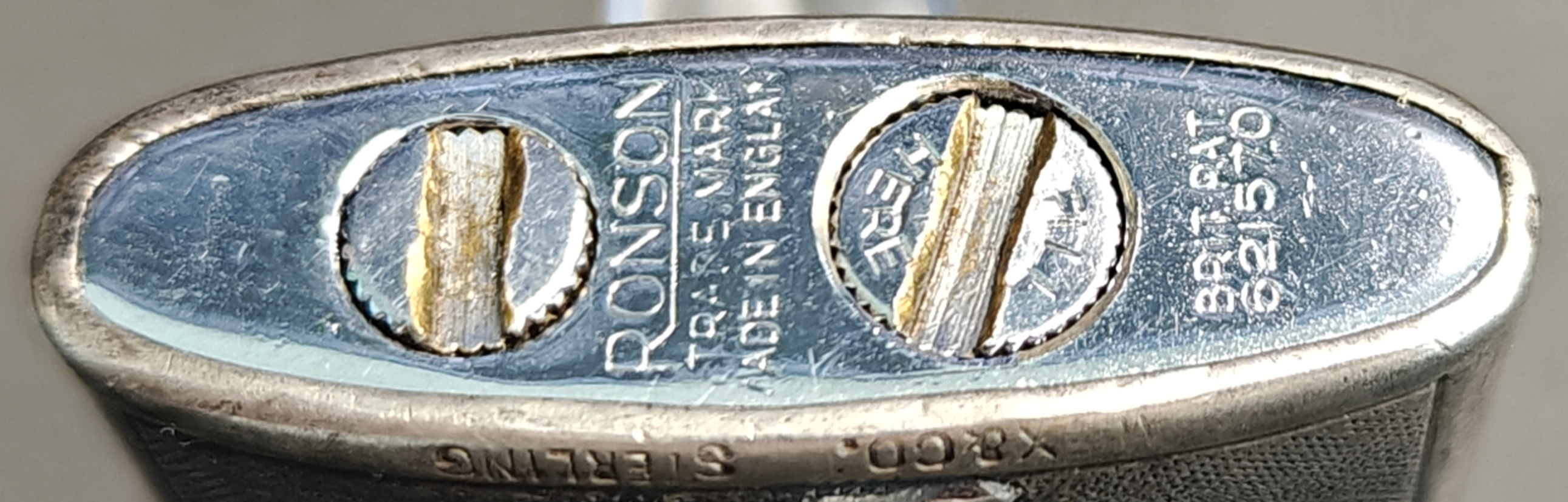
1946-19491946 年起投产的改良第二代 Standard 机芯专属专利,用于解决初代 BRIT PAT 321540 机型齿轮易磨损、挥发漏油缺陷;


ADONIS
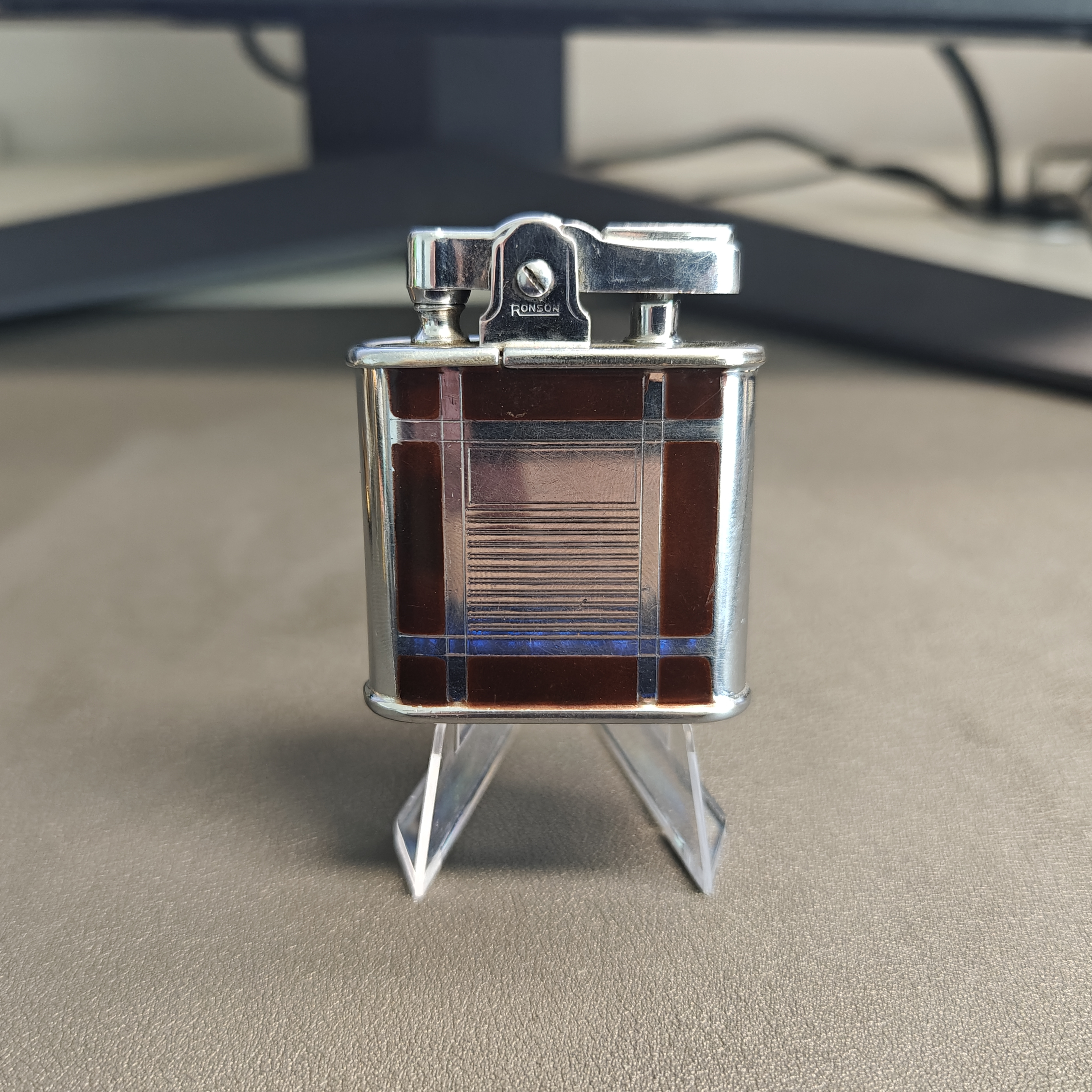
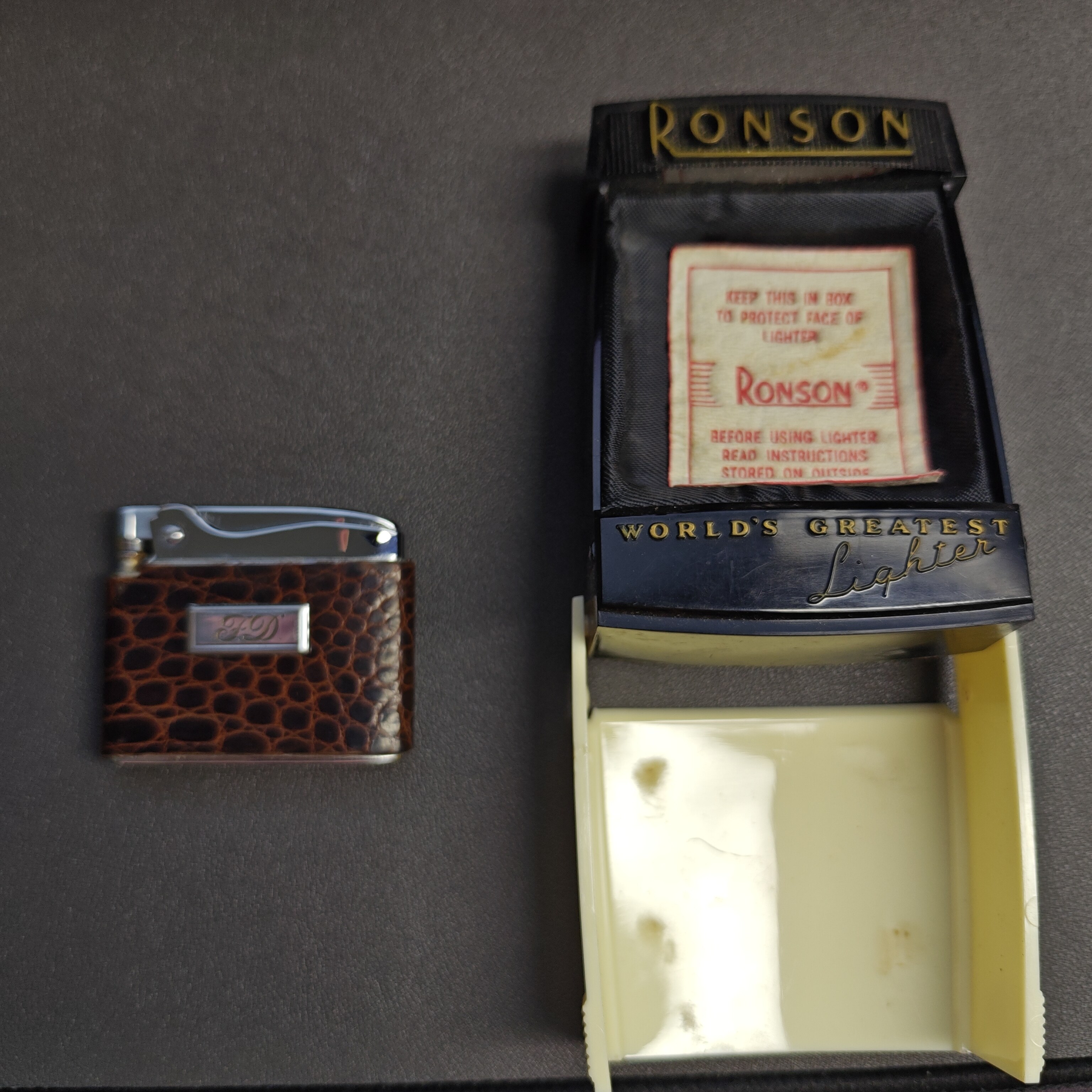
1947-1950 mid-to-lateOrigin Story: Pre- and during WWII, Ronson classics like the Standard and Whirlwind were known for their heavy-duty, rugged industrial look. Post-war, Western aesthetics shifted toward Streamline and Modernist styles. Ronson needed an ultra-slim model that could fit perfectly in a suit pocket without distorting the garment's clean lines.
Target Audience: High-income political and business elites, upper-class gentlemen, and refined men who value precision in their accessories.
Design Features:
Ultra-Slim Streamline Profile: Internal gears and linkages were miniaturized to the extreme, resulting in exceptionally smooth, elegant side contours.
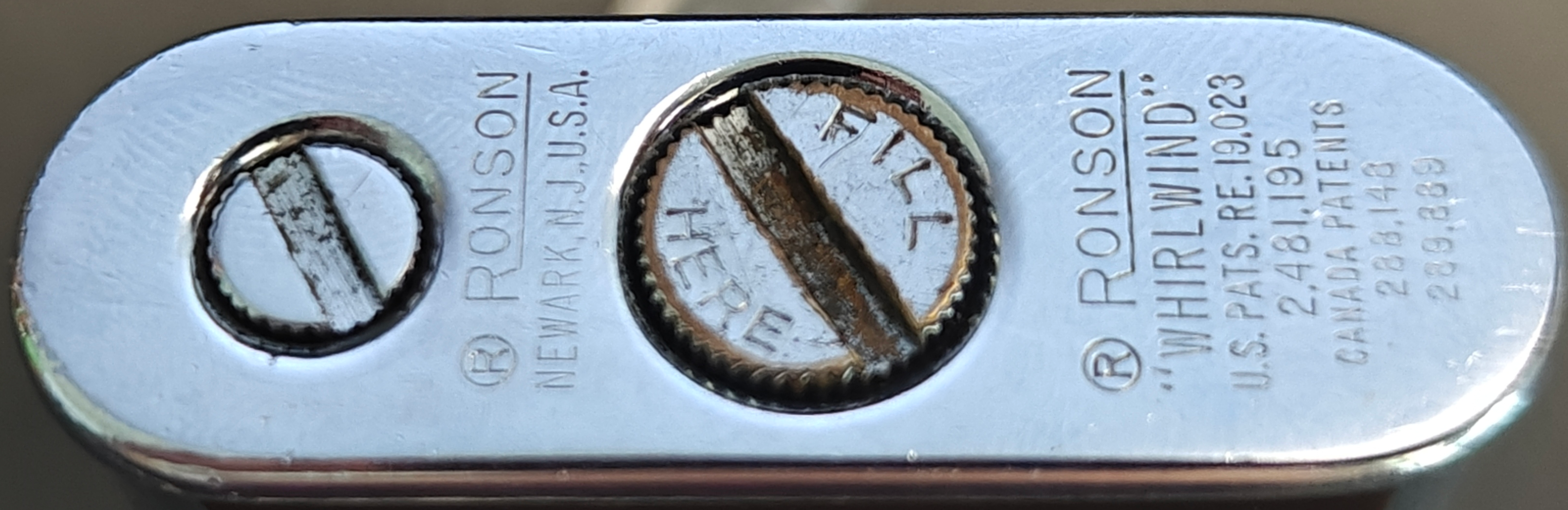
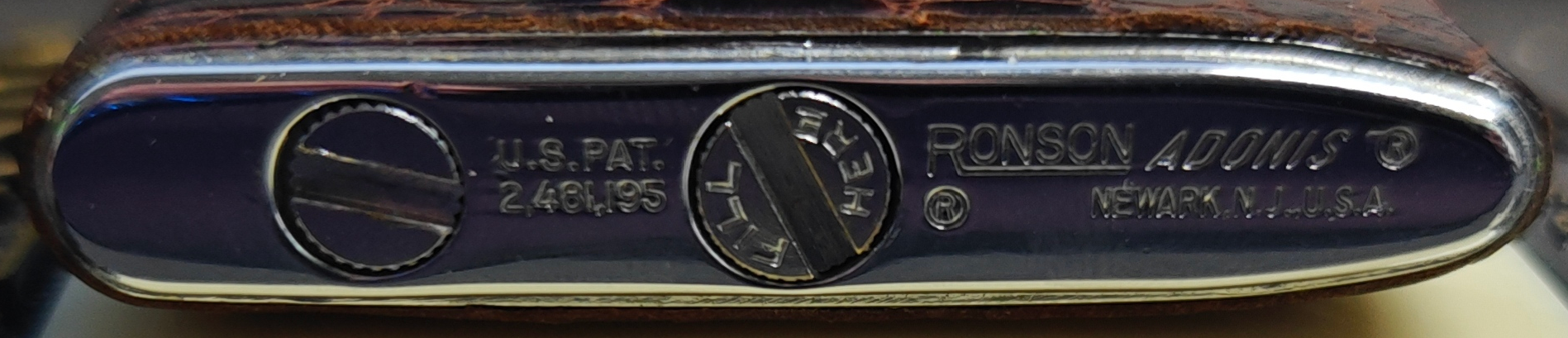
Single Slot Blind Cap: To minimize thickness, traditional dual-bottom screws were eliminated. Instead, a single oversized slot blind cap was designed at the base, combining oiling and flint replacement into one operation.
Patented Technology Timeline: The core patent for this ultra-slim mechanical linkage was submitted by Ronson engineers to the USPTO in 1946 and officially granted on 9, 6, 1949 (U.S. Patent No. U.S. PAT. 2481195).
Production Period: First introduced around 1947/1948, production continued through the mid-to-late 1950s. As butane-powered models like the Ronson Varaflame gained popularity in the late 50s, this kerosene series was gradually phased out.