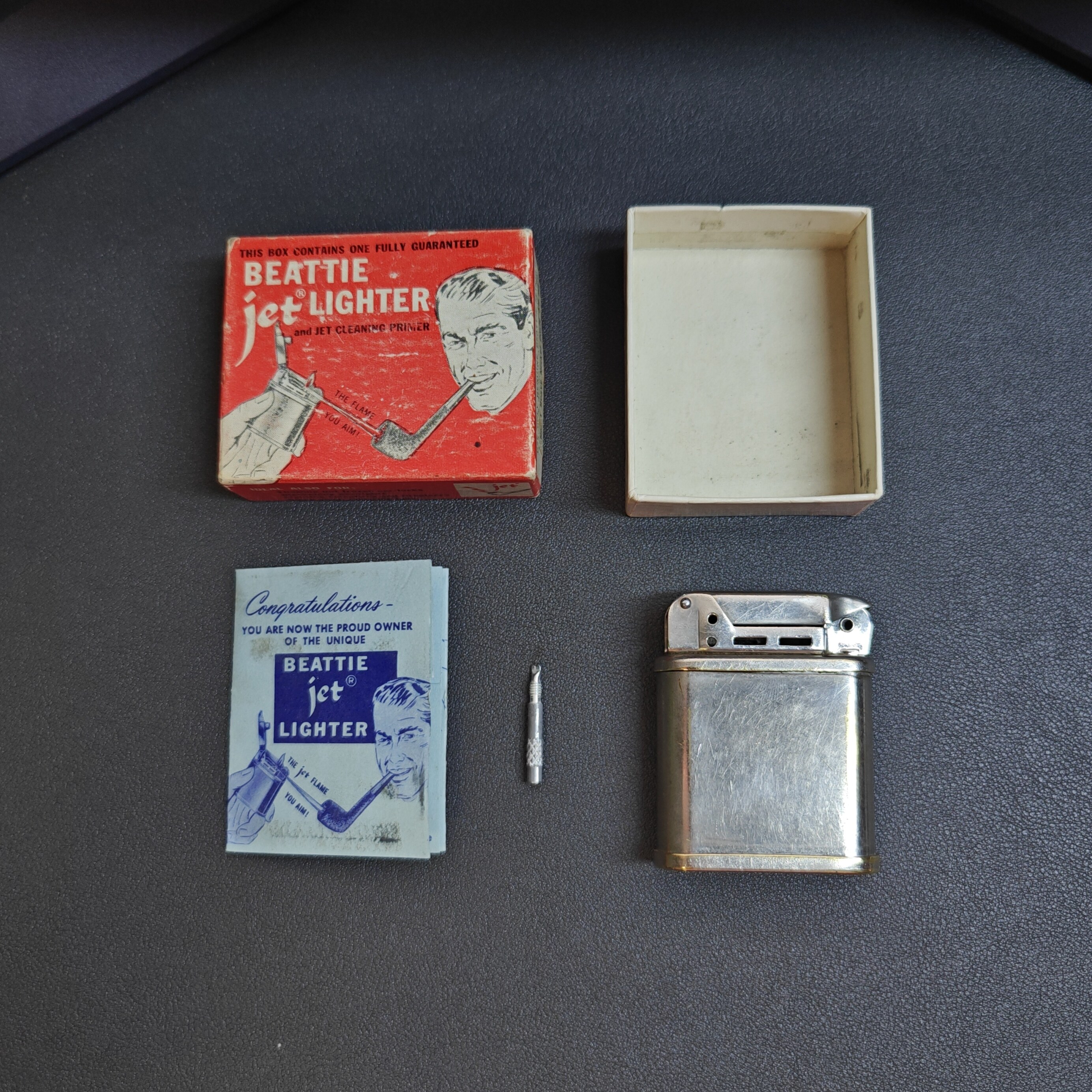
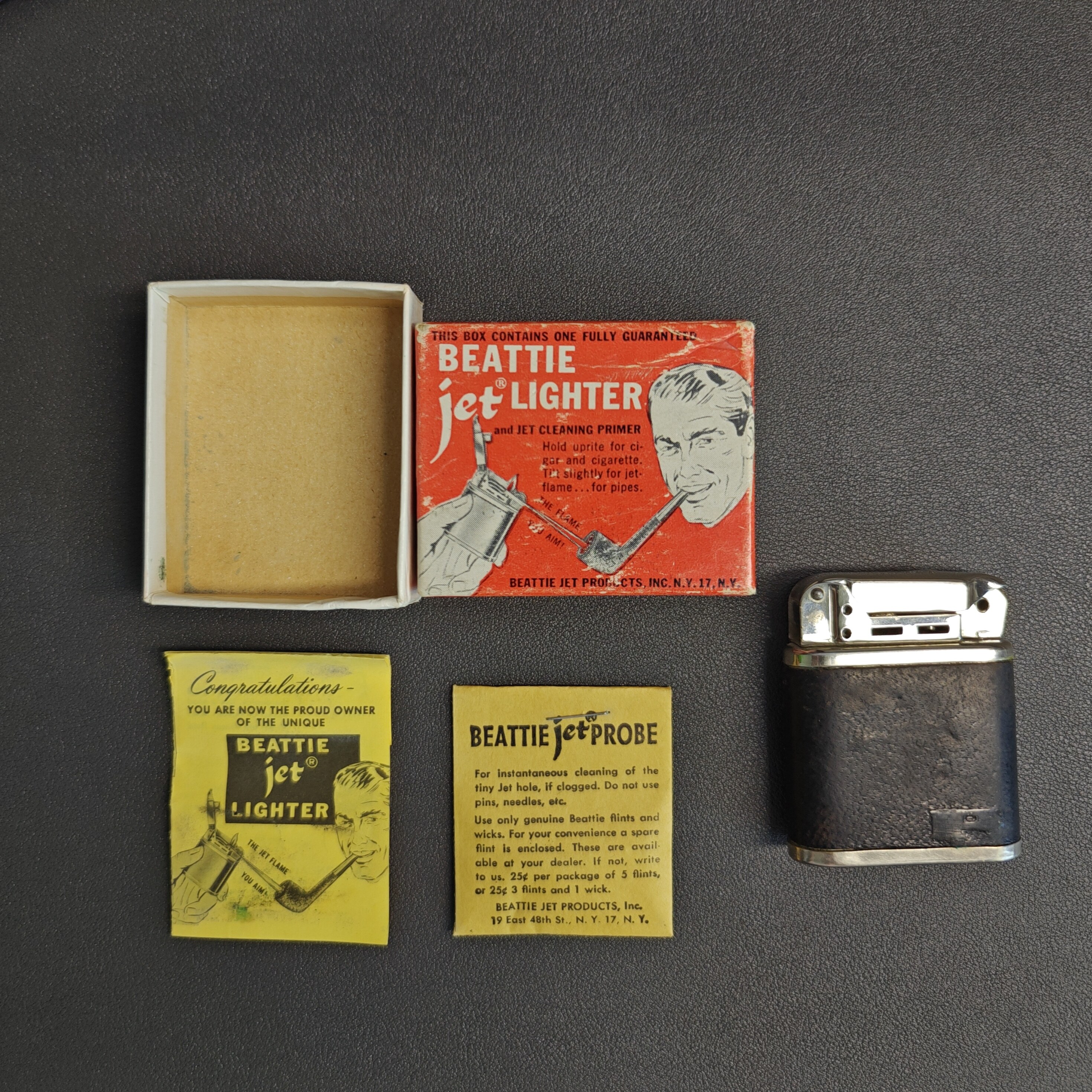
Jet
Structure Explanation
Dual Cotton Wicks with Oil Reservoir: The inner chamber features two cotton wicks—one exposed as the primary ignition wick, and another sealed within a U-shaped red or yellow copper heat-conducting tube. This design continuously draws liquid kerosene from the bottom compartment deep into the copper tube.
Heat Transfer and Vaporization: When the wick is lit vertically, a standard flame appears. Tilting the lighter causes the flame to rise and envelop the blind end of the metal heat pipe, continuously heating it. Due to the metal's high thermal conductivity, the liquid kerosene inside rapidly heats above its boiling point. In the sealed chamber, it violently vaporizes and expands, generating high pressure.
Directed Jet: Because the rear end of the copper tube is sealed by a tightly fitted oil-absorbing core, high-pressure oil-gas cannot flow backward and must exit through the only available path—a micro-orifice nozzle hidden inside the copper tube or within the wind shield. As this high-pressure gas jet erupts, it is instantly ignited by the main flame, creating a powerful, highly directional blue flame that resembles a torch.